If you're researching dentures in Bradenton, FL, you've come to the right place. This page addresses the most frequently asked questions about complete dentures, partial dentures, implant-supported dentures, and everything in between, from how they work to what getting dentures actually involves. Whether you're missing a few teeth or exploring full tooth replacement options, our …
If you’re researching dentures in Bradenton, FL, you’ve come to the right place. This page addresses the most frequently asked questions about complete dentures, partial dentures, implant-supported dentures, and everything in between, from how they work to what getting dentures actually involves. Whether you’re missing a few teeth or exploring full tooth replacement options, our goal is to give you clear, honest answers so you can make a confident, informed decision. Individual needs vary, and a personal consultation is always the best next step. Contact BayView Dental Associates at (941) 239-6757 to get started.
What Are Dentures?
Dentures are removable oral appliances designed to replace missing teeth and restore function to your upper and lower jaws. They consist of denture teeth set into a gum-colored base that rests on your gum tissue. Complete dentures replace all the teeth in an arch, while partial dentures fill in gaps when some natural teeth remain. Modern false teeth are crafted to look natural and fit comfortably, helping you eat, speak, and smile with greater confidence. Depending on the type you need, your provider will recommend the best fit for your oral health and lifestyle.
What Is the Difference Between Complete Dentures and Partial Dentures?
Complete dentures replace all the teeth in either the upper or lower jaw, or both. Partial dentures are used when you still have some remaining natural teeth. They fill in the gaps and help protect your remaining teeth from shifting. Full and partial dentures are made from different materials and attach differently. Flexible partials, for example, use a softer material that many patients find more comfortable. Your provider will evaluate your remaining teeth, gum tissue, and jawbone before recommending a treatment plan that fits your situation.
What Are Immediate Dentures?
Immediate dentures are placed the same day your teeth are removed, so you are never without teeth during the healing process. They serve as a temporary denture while your gums and jawbone reshape after teeth removal. Because the mouth changes shape as it heals, immediate dentures typically require relining or replacement with conventional dentures once the healing process is complete. They are a practical option for patients who want to maintain appearance and function right away, but it’s important to understand they are a transitional solution. Your provider will outline the full process during your consultation.
What Are Implant-Supported Dentures?
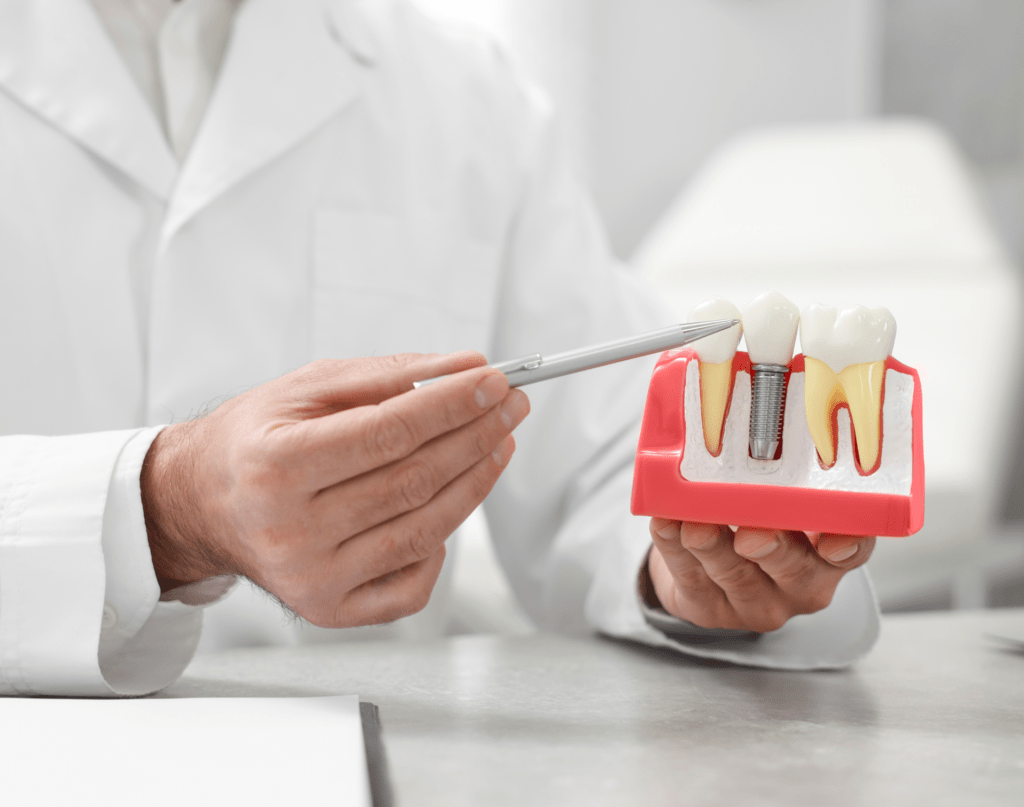
Implant-supported dentures combine the stability of dental implants with the coverage of traditional dentures. Dental implants are surgically placed into the jawbone, where they bond with the bone over time to create a secure anchor. The denture then attaches to those implants, significantly reducing movement and improving chewing ability compared to conventional dentures. For patients concerned about a loose denture or dentures that rub, implant-supported options are often worth exploring. The number of implants needed depends on your jaw structure and the type of appliance recommended. Your provider can walk you through how many implants make sense for your case.
Am I a Good Candidate for Dentures?
Most patients who have multiple missing teeth, broken teeth, or extensive gum disease that has compromised their remaining teeth are candidates for dentures. Good overall health, adequate gum tissue, and sufficient jawbone support contribute to a successful outcome. For implant-supported dentures, bone grafting may be needed first if bone density is insufficient. Patients with a few missing teeth may be better served by partial dentures rather than a full set. The best way to determine candidacy is through a comprehensive exam. Your provider will review your oral health, discuss your goals, and help you understand which option fits your needs.
What Do Dentures Feel Like When You First Wear Them?
New dentures often feel unfamiliar during the first few weeks as your facial muscles and tongue adjust to the appliance. Some patients notice increased saliva flow, mild sore spots where the denture contacts gum tissue, or slight difficulty with speech and eating. These experiences are common and typically improve with time. Wearing dentures consistently helps you adapt more quickly. Denture adhesive can help stabilize the fit while your mouth adjusts. If dentures feel loose or continue to cause discomfort beyond the initial adjustment period, contact your provider so adjustments can be made.
How Do I Clean Dentures Properly?
Clean dentures daily using a soft denture brush and a denture cleaning solution. Avoid regular toothpaste, which can be too abrasive and may scratch the surface of your false teeth. Rinse your dentures after eating and brush them gently to remove food particles and plaque. Soak dentures overnight in a mild denture cleaning solution or plain water to help them maintain their shape and stay fresh. Never use boiling water, which can warp the material. Brush your gum tissue and any remaining natural teeth with a soft toothbrush to keep your mouth healthy between dental visits.
Should I Sleep With My Dentures In?
Most dental professionals recommend removing dentures overnight to give your gum tissue time to rest. Wearing dentures continuously can place pressure on the underlying gum tissue and jawbone, which may contribute to faster bone loss over time. Storing dentures overnight in a denture cleaning solution or water also helps maintain their shape and hygiene. Some patients with implant-supported dentures may have different instructions depending on the type of attachment used. Your provider will give you personalized guidance based on your specific appliance.
How Long Do Dentures Last?
Dentures typically last between five and ten years with proper care, though this varies depending on the type of denture, how well they are maintained, and how your mouth changes over time. As the jawbone and gum tissue naturally shift with age, dentures may need to be relined, rebased, or replaced to maintain a proper fit. Broken dentures should be brought to your provider promptly rather than repaired at home. Regular dental checkups allow your provider to monitor fit, check for wear, and address sore spots or changes before they become larger issues. Individual results may vary.
Can I Eat Normally With Dentures?
Most patients can enjoy a wide variety of foods while wearing dentures, though a soft food diet is recommended during the initial adjustment period. As you become more comfortable, you can gradually reintroduce firmer foods. Sticky or very hard foods may dislodge the appliance or cause discomfort, particularly with conventional dentures. Implant-supported dentures generally offer more stability for chewing. Denture adhesive can provide additional confidence when eating. Your provider can offer practical guidance on what to expect and how to adapt your diet as you transition to wearing dentures full-time.
Does Dental Insurance Cover Dentures?
Many dental insurance plans include some coverage for dentures, though the extent of that coverage varies depending on the type of plan, your provider network, and the specific dental procedures involved. Full or partial dentures may be covered at different reimbursement levels. Dental insurance plans often have annual maximums and waiting periods that affect how much they cover. It is important to verify your benefits before beginning treatment. Our team is happy to help you understand your coverage options and find a path that keeps care accessible.
Does Medicare Cover Dentures?
Original Medicare typically does not cover dentures or routine dental procedures. However, some Medicare Advantage plans do include dental benefits that may cover partial or complete dentures. Coverage levels vary significantly between plans, so reviewing your specific policy is essential before making assumptions about what is covered. Our team can help you navigate your options, and our SmilePlan in-house membership program offers an alternative for patients without traditional dental insurance coverage. Ask about SmilePlan when you schedule your consultation.
How Much Do Dentures Cost in Bradenton, FL?
Dentures cost varies depending on the type. Partial dentures, complete dentures, or implant-supported dentures, as well as the materials used and any additional procedures like extractions or bone grafting. Cost varies depending on your individual treatment plan and oral health needs, which is why we provide personalized estimates during consultations rather than one-size-fits-all pricing. CareCredit financing and our SmilePlan membership are available to help make dental care more accessible. Contact us at (941) 239-6757 or visit our online contact page to schedule your consultation and discuss your options.
Why Choose BayView Dental Associates for Dentures in Bradenton, FL?
BayView Dental Associates was founded locally in 1987 by Dr. Kenneth Liszewski, DMD, who built the practice from a solo office near the Sarasota Airport into a trusted regional group, not a franchise or corporate buyout. Dr. Liszewski holds Diplomate status from the International Dental Implant Association and brings over 35 years of experience in restorative and implant dentistry. Across all locations, our providers use advanced imaging and digital technology to support accurate treatment planning. Our anxiety-first approach means we take the time to explain your options clearly and comfortably. Explore our locations throughout the Bradenton and Sarasota area to find the office most convenient for you.
When to Schedule a Consultation for Dentures
If you are living with missing teeth, broken teeth, or dentures that feel loose or no longer fit well, now is a good time to talk to a provider. A consultation gives you a personalized assessment of your oral health, a clear picture of your replacement teeth options, and a treatment plan built around your goals and budget. Our team at BayView Dental Associates includes experienced, board-certified providers across Bradenton, Sarasota, and the surrounding Gulf Coast communities, all committed to helping you maintain a healthy, comfortable smile. Call us at (941) 239-6757 or request an appointment online to take the next step.

Dr. Samuel Margulies, DMD
Dr. Samuel Margulies, a Miami native, earned his degree in economics from The George Washington University before going on to receive his Doctor of Dental Medicine from Nova Southeastern University. He further honed his skills through a General Practice Residency at St. Barnabas Hospital in New York City, followed by private practice in the city and advanced training at NYU School of Dental Medicine, where he earned a certificate in Advanced Aesthetic Dentistry — an integrated approach to aesthetics and function encompassing cosmetic smile enhancement, temporomandibular joint diagnosis and treatment, and full mouth reconstruction. He has continued to expand his expertise through postgraduate training in temporomandibular disorders, sleep apnea, Invisalign, and implant placement, making him a well-rounded clinician capable of addressing a wide range of patient needs. Now proud to serve the North Port community, Dr. Margulies is a firm believer in building patient relationships grounded in trust, communication, empathy, and respect, and looks forward to working with each patient to meet their oral health goals. When he is not putting his patients at ease in the chair, he enjoys soaking up the Florida sunshine on land or water with family and friends.