When weighing Invisalign vs. traditional braces, deciding which is right for you is one of the most common questions patients ask our team at Bayview Dental. Both options can help improve alignment and support long-term oral health, but they work differently and suit different lifestyles. Whether you are considering treatment for yourself or a family …
When weighing Invisalign vs. traditional braces, deciding which is right for you is one of the most common questions patients ask our team at Bayview Dental. Both options can help improve alignment and support long-term oral health, but they work differently and suit different lifestyles. Whether you are considering treatment for yourself or a family member in the Bradenton, FL area, we believe every patient deserves a clear, honest comparison before making a decision. If you would like personalized guidance, our team welcomes you as a new patient and is happy to walk through your options together.
What Is Invisalign?
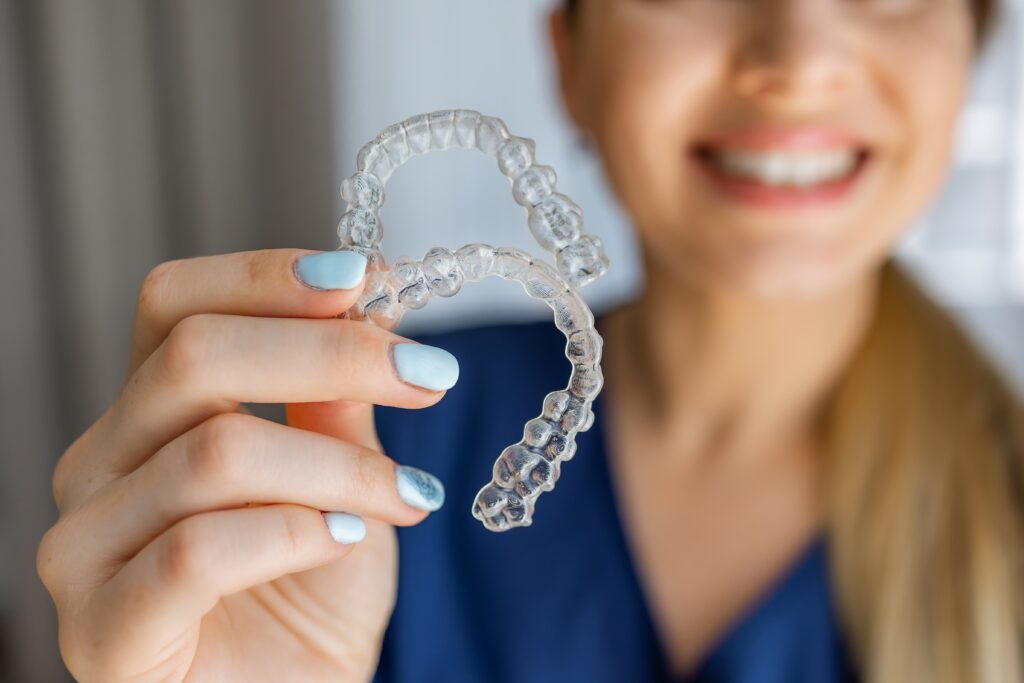
Invisalign is a system of clear, removable aligners custom-fabricated to fit your teeth and gradually shift them toward a more aligned position. Each set of aligners is worn for approximately one to two weeks before progressing to the next in the series. Because the aligners are made from smooth, BPA-free plastic, they are generally well-tolerated by most patients and do not involve metal brackets or wires.
Invisalign may help address mild to moderate crowding, spacing, and certain bite concerns. Patients appreciate the aesthetic advantage: the aligners are nearly invisible during wear, making them a popular choice for working adults and image-conscious teens. Aligners are removed for eating, drinking anything other than water, and oral hygiene routines, which many patients find convenient. Treatment timelines vary by case complexity, but many patients complete their series within 12 to 18 months. Individual results may vary.
What Are Traditional Braces?
Traditional braces use metal or ceramic brackets bonded directly to each tooth, connected by an archwire that your provider adjusts at regular intervals. This continuous, controlled pressure moves teeth gradually into their target positions over time. Unlike removable aligners, braces work around the clock because they cannot be taken out between appointments.
Traditional braces may be recommended for moderate to severe misalignment, complex bite issues, and cases where more precise force control is beneficial. They are often a strong fit for younger patients who may not consistently wear removable aligners as directed. Ceramic braces offer a less noticeable appearance than metal while maintaining the same mechanical approach. Treatment typically ranges from 18 months to three years, depending on the complexity of the case. Individual results may vary.
Key Differences Between Invisalign and Traditional Braces
Invisalign uses clear plastic aligners and are ideal for mild to moderate alignment issues, whereas traditional braces use fixed brackets and archwires and are ideal for mild to severe alignment issues and bite concerns. The results timeline for Invisalign is typically 12 to 18 months, but varies by case. Traditional braces can typically 18 months to 3 years and varies by case.
Compliance is a significant factor with Invisalign: aligners must be worn for the recommended hours each day to stay on schedule. Patients who travel frequently or have professional settings where discretion matters often prefer the near-invisible look of clear aligners. On the other hand, traditional braces require no self-discipline regarding wear time, which can make them a more predictable choice for complex tooth movement or younger patients still developing consistent habits.
Which Is Right for You?
Choosing between Invisalign and traditional braces depends on several personal factors, and there is genuinely no single correct answer for every patient.
Invisalign may be a strong fit if you are an adult or older teen with mild to moderate alignment concerns, prefer a discreet appearance during treatment, and can commit to wearing aligners for 20 to 22 hours daily. It may also appeal to patients with active lifestyles who want the flexibility to remove their aligners during contact sports or special occasions.
Traditional braces may be the better recommendation if you have moderate to severe crowding or bite issues, are treating a younger child or teen who may not consistently wear removable aligners, or have a case that requires more precise control of tooth movement over a longer period. Ceramic bracket options can offer a more subtle look while retaining the mechanical advantages of fixed appliances.
At Bayview Dental, our team in Bradenton brings advanced Invisalign training and a full-scope approach to dental consultations. Our team treats every patient as an informed participant in their own care, walking through the specifics of your bite, alignment goals, and lifestyle before making any recommendations. Individual results may vary, and a personalized consultation is the most reliable way to determine which path fits your needs.
Why Choose Bayview Dental in Bradenton, FL?
Bayview Dental is a locally rooted, multi-location practice founded by Dr. Kenneth Liszewski, DMD, who launched his first office near Sarasota in 1987 and built the group from the ground up. Dr. Liszewski holds Diplomate status from the International Dental Implant Association and brings more than 35 years of experience in cosmetic and restorative dentistry. Dr. Margulies at our Bradenton location holds advanced training in Invisalign, implant placement, and aesthetic dentistry from NYU.
We offer our SmilePlan in-house membership for patients without traditional insurance, along with CareCredit financing, to help keep treatment accessible. Our Bradenton Blake location welcomes patients who are ready to explore their options in a comfortable, unhurried environment.
Frequently Asked Questions
Does Invisalign cost more than traditional braces?
Treatment costs for both options vary based on case complexity, the length of treatment, and your location. Invisalign and traditional braces are often comparable in overall cost, though complex cases requiring longer treatment with braces may differ. Bayview Dental offers dental financing and insurance options, including CareCredit and our SmilePlan membership to help make either option more accessible. A consultation is the best way to get an accurate estimate for your specific case.
Can Invisalign and braces be combined with other cosmetic treatments?
Many patients choose to pursue cosmetic enhancements such as teeth whitening or veneers after completing orthodontic treatment. Timing matters, as your provider will generally recommend completing alignment treatment first so cosmetic work fits your final tooth positions accurately. Your Bayview Dental provider can help you plan a sequenced approach that supports both your alignment goals and your broader smile objectives. Individual results may vary.
How do recovery and day-to-day comfort compare between the two options?
Both Invisalign and traditional braces may cause some tenderness following adjustments or aligner changes, particularly in the first few days of each new stage. Invisalign aligners are made from smooth plastic and do not have brackets or wires that can irritate soft tissue. Traditional braces may occasionally cause minor irritation along the cheeks or gums, though this typically lessens as patients adjust. Most patients find both options manageable with time.
How do I choose a qualified provider for Invisalign or braces?
Look for a provider with demonstrated experience in the specific treatment you are considering, relevant advanced training, and a thorough consultation process. Asking about a provider’s case volume and reviewing before-and-after photos can also be informative.
Is Invisalign appropriate for teens, or is it primarily for adults?
Invisalign offers a version of its system designed specifically for teen patients, including compliance indicators and replacement aligners for those that may be lost. However, consistent wear is essential for results, and some younger patients benefit more from the predictability of fixed braces. Your provider will assess maturity, case complexity, and lifestyle factors during the consultation to help determine which option may be more appropriate. Individual results may vary.
Schedule a Consultation in Bradenton, FL
Whether you are leaning toward Invisalign or traditional braces, the right path starts with an honest conversation. Bayview Dental serves patients throughout Bradenton and the surrounding communities with personalized, judgment-free care. Contact us today to schedule your consultation. We look forward to welcoming you.
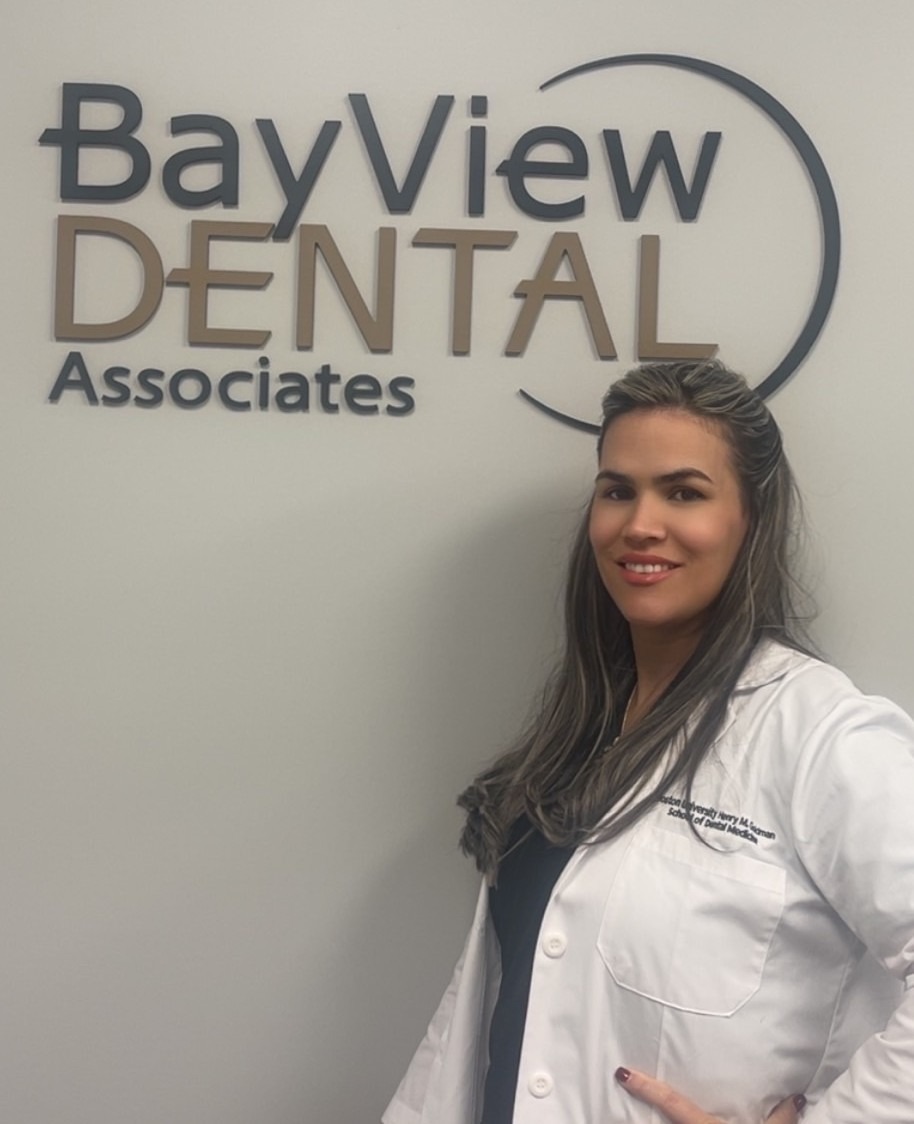
Dr. Maylin Chaviano
Dr. Maylin is from Cuba, where she was a dentist before coming to the USA to continue studying dentistry. She gained experience as a dental assistant and a dental hygienist for 6 years, where she worked at Bayview Dental – Blake. Dr. Maylin completed her education at Boston University Henry M. Goldman School of Dental Medicine. She loves all aspects of general dentistry, but most enjoys restorative, RCT, and extractions. She has a passion for gum health, since she saw the importance of healthy gums while working as a hygienist. Dr. Maylin wants patients to see her as family and someone to trust. Outside of dentistry, she loves to spend time with her family, going to the beach, and reading the bible.
Dr. Maylin is also bilingual, speaking both English and Spanish.