Cavities are a topic that matters to every dental patient, whether you've had one before or hope never to. Tooth decay is one of the most common chronic health conditions in the United States, and its early stages are often silent, so patients may not realize something is wrong until the problem has progressed. At …
Cavities are a topic that matters to every dental patient, whether you’ve had one before or hope never to. Tooth decay is one of the most common chronic health conditions in the United States, and its early stages are often silent, so patients may not realize something is wrong until the problem has progressed. At Bayview Dental, our team believes that an informed patient is an empowered one. Understanding what cavities look and feel like in their earliest stages gives you the best chance of protecting your smile before you need more involved treatment.
What Causes Cavities and Why Early Detection Matters
The Basic Biology of Tooth Decay
Cavities, also called dental caries, form when bacteria in the mouth feed on sugars and produce acids that gradually wear away tooth enamel. This process, known as demineralization, begins on the tooth’s outer surface and works inward over time. The earliest stage of decay, sometimes called a white spot lesion, offers a window of opportunity: the enamel has not yet broken down completely, and fluoride and improved oral hygiene may help slow or reverse the process through remineralization.
Why Waiting Makes It Harder
Once decay reaches the inner layer of the tooth, called dentin, it progresses faster because dentin is softer than enamel. From there, bacteria can eventually reach the pulp, the nerve-containing center of the tooth, which may require more complex treatment. Catching a cavity early often means the difference between a straightforward dental filling and a procedure requiring a dental crown or, in more advanced cases, tooth replacement.
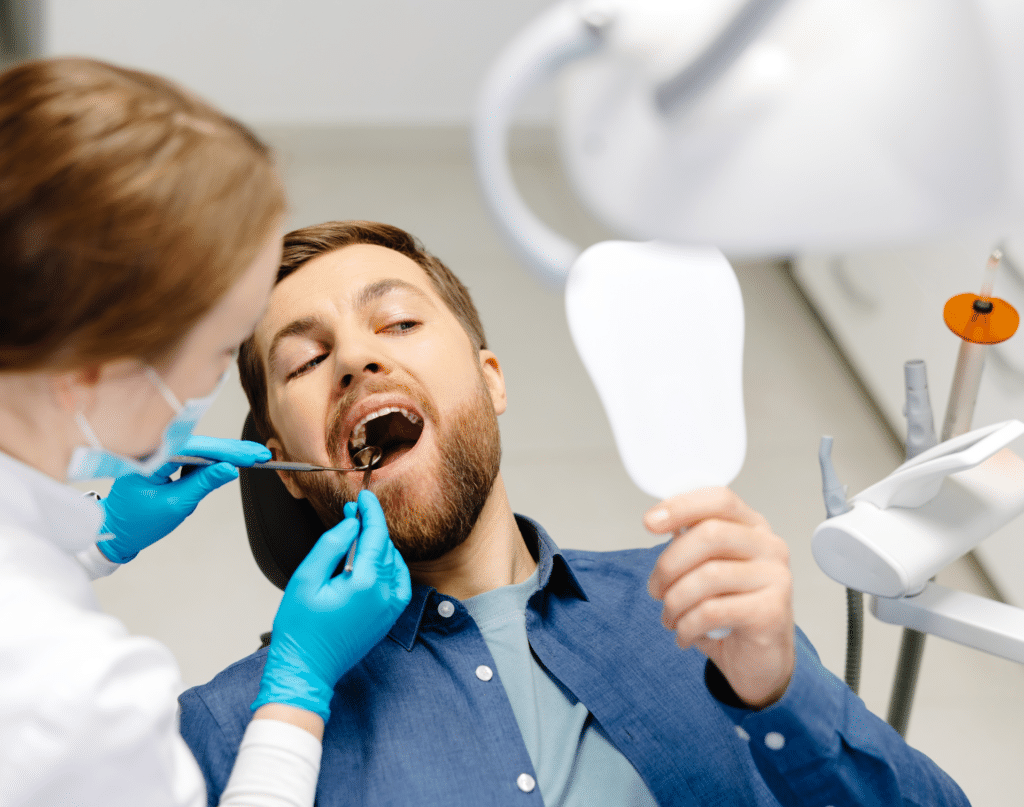
At Bayview Dental, our use of 3D cone-beam imaging across locations helps our providers see decay that may not yet be visible to the naked eye, allowing for earlier, less invasive intervention. Routine dental exams and checkups are the single most reliable tool for catching cavities before they become costly problems.
Recognizing the Early Warning Signs of Cavities
Sensitivity That Feels Out of Nowhere
One of the most commonly reported early signs of a cavity is tooth sensitivity, particularly to hot, cold, or sweet foods and beverages. If a sip of iced water or a bite of something sugary triggers a brief, sharp sensation in a specific tooth, that response may suggest the enamel is beginning to weaken. Sensitivity alone does not confirm a cavity, but it is worth mentioning at your next visit.
Visible Spots or Discoloration
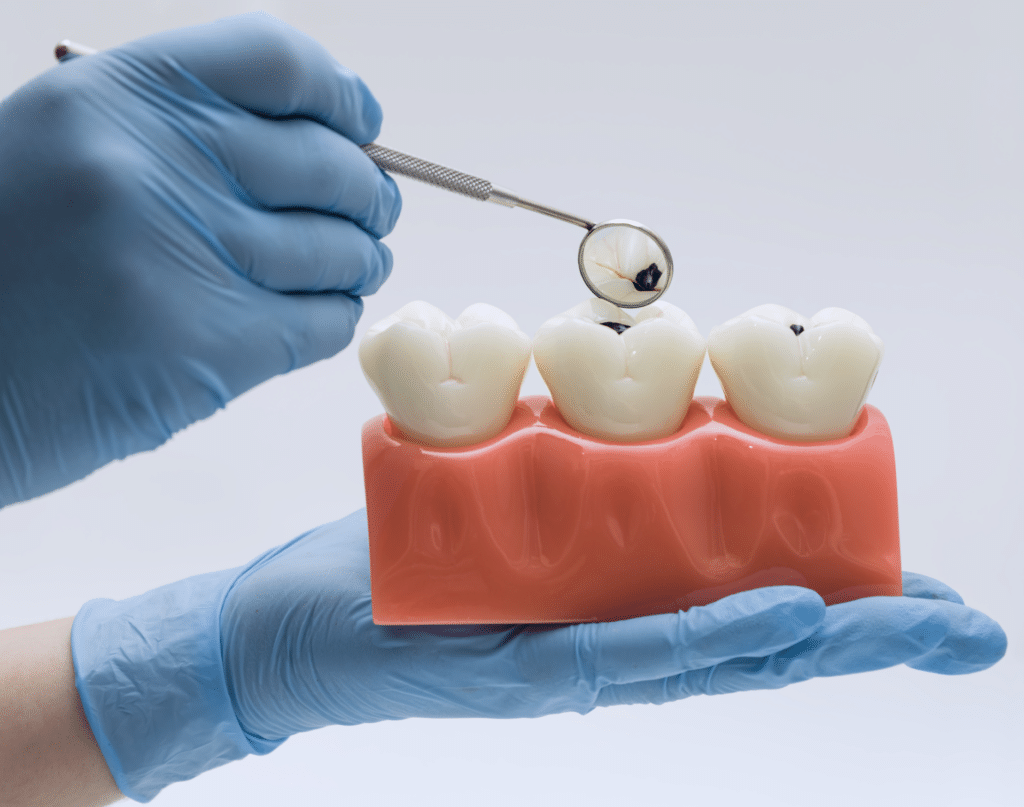
Early decay can sometimes appear as a chalky white or light brown spot on the tooth surface. As the cavity progresses, that spot may darken to brown or black. These spots are most common in the grooves of the back teeth or between teeth, areas that are harder to see during a self-exam but clearly visible during a professional dental cleaning.
Mild Toothache or Pressure
A dull, intermittent ache in a tooth, especially one that seems to appear and disappear without obvious cause, can be an early indicator that decay is underway. Some patients describe it as a vague pressure when they bite down. These sensations are easy to dismiss, especially when they are mild, but a skilled provider will want to evaluate them.
Bad Breath That Doesn’t Resolve with Brushing
Persistent bad breath or an unusual taste in the mouth can sometimes be linked to bacterial activity around an untreated cavity. While bad breath has many possible causes, recurring odor that doesn’t improve with consistent brushing and flossing may be a reason to schedule an evaluation sooner rather than later. Individual results vary in how early warning signs appear, which is why a professional assessment is always the most reliable next step.
What Happens If a Cavity Goes Untreated
Decay Progresses in Stages
Many patients are surprised to learn how quietly a cavity can advance. In the earliest stage, decay affects only the enamel and may cause no symptoms. As it moves into the dentin, sensitivity and discomfort tend to increase. If decay reaches the pulp, a patient may experience significant pain, swelling, or infection. At that stage, a dentist may recommend a root canal or extraction, and the conversation shifts from prevention to restoration.
The Ripple Effect on Neighboring Teeth
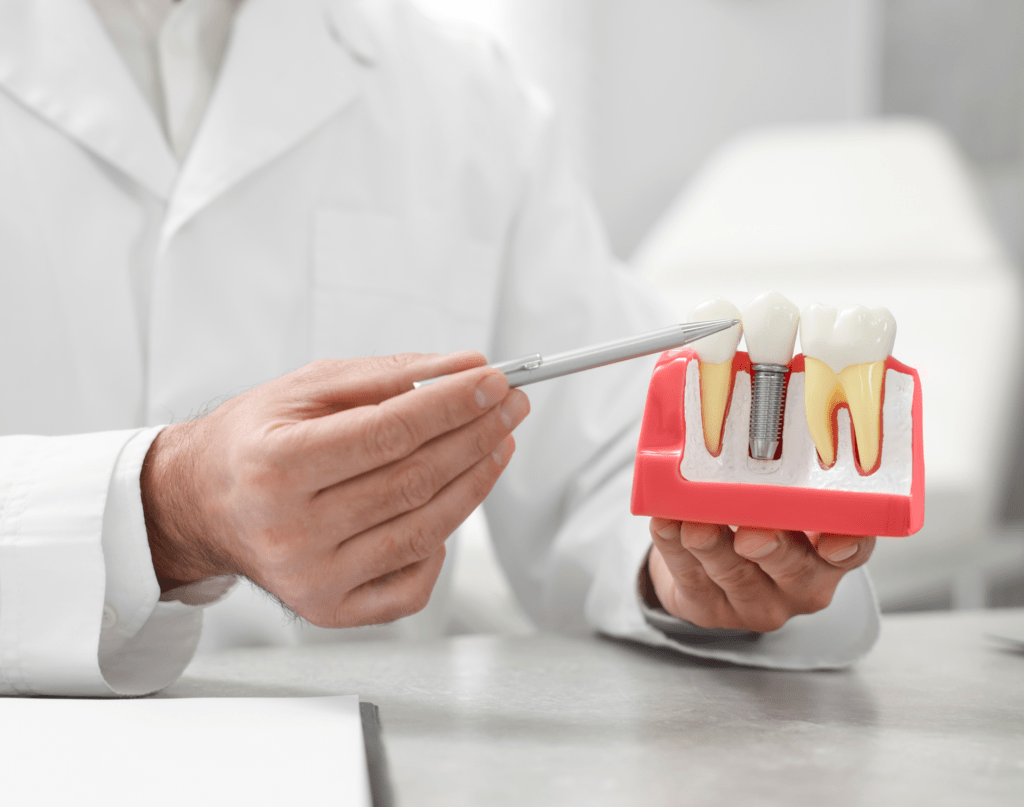
An untreated cavity doesn’t just threaten the affected tooth. Bacteria can spread to adjacent teeth, and a severely compromised tooth may eventually need to be removed. Tooth loss brings its own challenges, from shifting alignment to bone loss in the jaw. Bayview Dental offers dental bridges as one solution for replacing a missing tooth, and our team can walk you through all available options if a tooth cannot be saved. We treat every patient as a true partner in their own care, starting with a full picture.
Protecting Your Long-Term Oral Health
The good news is that most cases of significant decay are entirely preventable with consistent care. Twice-daily brushing, daily flossing, reducing sugar consumption, and keeping up with professional cleanings and exams form the foundation of cavity prevention.
For patients navigating cost concerns, Bayview Dental’s SmilePlan in-house membership is worth exploring, as it is designed to make routine preventive care accessible for patients without traditional dental insurance. You can learn more about affordable dental care options through our team.
Why Choose Bayview Dental in Bradenton, Florida?
Bayview Dental is not a corporate chain or a franchise buy-in. Dr. Kenneth Liszewski, a Temple University School of Dentistry graduate with more than 35 years of experience, built this practice from the ground up beginning in 1987, and that independent, community-centered spirit still defines how every location operates. Dr. Liszewski holds Diplomate status from the International Dental Implant Association, and the broader Bayview team includes providers like Dr. Samuel Margulies, who brings additional training in advanced aesthetics and implant dentistry to the Bradenton area.
We treat every patient, whether they come in for a routine cleaning or a more involved concern, as a VIP, a brand promise we take seriously at every visit. Advanced diagnostics, including 3D cone-beam imaging, help our providers catch problems earlier, and we offer same-day emergency appointments when something can’t wait. We welcome new and returning patients across the greater Bradenton and Sarasota area.
Frequently Asked Questions About Cavities
How do I know if I have a cavity if I’m not in pain?
Many cavities in their early stages cause no pain, which is why routine dental exams are so important. A provider can detect early decay using visual examination, dental X-rays, or advanced imaging before symptoms develop. If it’s been more than six months since your last checkup, scheduling one is the most reliable way to know whether decay is present.
Can a cavity heal on its own?
True cavities, meaning areas where the enamel has physically broken down, cannot heal on their own. However, very early-stage demineralization, sometimes called a white spot lesion, may slow or partially reverse with fluoride treatments and improved oral hygiene. A dental provider can assess whether a lesion is still reversible or needs treatment. Do not assume a small spot will resolve without professional evaluation.
How quickly can a cavity progress?
The rate of cavity progression varies by individual and depends on factors including diet, saliva production, oral hygiene habits, and the type of bacteria present. Some cavities develop slowly over years, while others can advance more quickly, especially in children or patients with dry mouth. That is why six-month checkups are widely recommended, even for patients who feel no discomfort.
What happens during cavity treatment at Bayview Dental?
For most early-stage cavities, treatment involves removing the decayed portion of the tooth and placing a filling. Bayview Dental uses modern materials and digital technology to make this process as comfortable as possible. For more advanced cavities, your dentist may recommend a dental crown or other restorative option. Your provider will explain every step and make sure you feel confident before any treatment begins.
Is Bayview Dental accepting new patients in Bradenton?
Yes, Bayview Dental welcomes new patients at multiple locations serving the Bradenton and greater Sarasota area. The practice offers same-day emergency appointments and makes every effort to accommodate patients with urgent dental concerns. You can explore new patient information on the Bayview Dental website or call to speak with a team member directly about scheduling.
Schedule Your Dental Exam at Bayview Dental in Bradenton
If this guide to cavities and their early warning signs has raised any questions about your own oral health, the most helpful next step is a conversation with a caring dental provider. Bayview Dental serves patients across Bradenton, Florida, and the surrounding communities with compassionate, thorough care. Visit our Bayview Dental locations page to find the office most convenient for you.

Dr. Miroslava Bounardjieva, DMD
Dr. Mira Bounardjieva was born in Sofia, Bulgaria and spent most of her life in Sarasota, FL before heading to Boston to complete her dental studies at Tufts University School of Dental Medicine. Though she appreciated her time in Boston, she quickly realized that sunny Sarasota was always meant to be her forever home and the community she was meant to serve. Committed to compassionate, comprehensive care, Dr. Mira offers general, cosmetic, and restorative dentistry with a detail-oriented approach and a dedication to achieving the most ideal outcomes for every patient — always treating those in her care as she would her own family. Outside the office, Dr. Mira cherishes time with family and close friends, and especially loves going on hikes and walks with her dogs, Charlie and Zeus. She also has a passion for DIY home projects and keeping her hands busy, and in the winter months you just might find her shredding the slopes on her snowboard.